CORKING THE BATS: WHY THE ATLANTA SCANDAL IS ONLY THE TIP OF THE NCLB ICEBERG

images-7Cheating is such an integral part of baseball culture that it is almost endearing.

Stealing bases when nobody is watching can get you into the Hall of Fame, for sure.  But I’m talking about real cheating.  Knowingly violating the rules of the game  to gain some perceived advantage– which, in baseball’s long history, takes on many forms and variations. And some are more compelling than others. Like George Brett and his pine tar bat, for example, producing one of the modern game’s most dramatic and memorable highlights.   Or the notorious spit ball.  Or Phil Niekro slipping a fingernail file into his hat so he could scratch out a better knuckleball. Or corking the bats.

images-2But then there are the extremes. Pete Rose bet on his own team.  In 1919 the Chicago White Sox accepted bribes to intentionally blow the World Series.  And more recently, there are regular accusations and suspicions about players  juicing.

Baseball is America’s game.  And so is the cheating that goes on that makes baseball baseball.

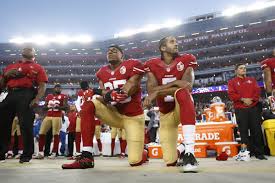
And so it was fascinating to watch the shockwaves ripple across the nation when one of our preeminent superintendents and a fistful of teachers were all indicted for their elaborate scheme to doctor their students’ test results.

The horror.  The scandal.  The betrayal. This is public education, for God’s sake.  Not baseball!

images-3

But for those of us who work in schools everyday, it should not be surprising at all that educators went to such unethical extremes to gain an advantage.  When you threaten people with their jobs, their livelihood, their professional careers… they become resourceful.  Welcome to the legacy of No Child Left Behind. High stakes testing is when you have everything to lose and nothing to gain.  When a system that we KNOW is bad for kids is treated as if it is worthy of our outrage when it is violated.

But the real question we ought to answer is this: What exactly is “cheating” when it comes to testing our kids?  When do we cross the line from stealing the catcher’s signs or corking the bats– to intentionally losing the World Series on a bribe?

This week, for example, I discovered the extreme degree to which many of the schools in my district are engaging in test prep with only three weeks remaining until the California Standards Test.  Test prep includes practicing sample test items and drilling in the strategies for how to select a correct answer in a multiple choice item.  The entire school throws out the rest of the curriculum and locks in on a single imperative.  All day.  Every day.  It’s legal.  Even encouraged with a wink– because it can definitely inflate results.

But it’s not good teaching.  It’s not good for our kids.  It doesn’t advance learning.  It doesn’t promote thinking or collaboration or communication or entrepreneurialism or any of the other 21st century skills that will soon be treated as the coin of the realm when the Common Core is ushered in.  In fact, devoting any more time at all to the various state assessment  packages that are now all but obsolete… seems to be the worst form of cheating.  It’s cheating our students of their time for authentic learning. Wasted days and weeks and months in pursuit of a mission that has nothing to do with our children’s future.

So ok… “test prep strategies “are not quite the same as calling for pizzas as you hunker down and change all of your students’ test booklets to reflect correct answers… but it’s still a hoax to pretend high test scores mean our kids are actually  learning.

imagesProfessional baseball is intensely competitive and the rewards are great for those few who excel in it.  So great in fact, that it creates a climate where cheating is inevitable.  But the game is pure and it will survive the scandal.

Educators, on the other hand, are typically driven by an instinct for service and advocacy.  Teaching a child is its own honest reward.  But NCLB was never  designed to promote performance as much as to punish the status quo.  It wasn’t really intended for teachers to improve instruction or close the achievement gap among our children- as much as it was for politicians to quantify their competing ideologies about what they believe matters in our schools.

Atlanta reminds us that we’ve lost our soul as a profession–and as a nation– not because of cheating scandals, but because we legislated the game away.

Sleeping_students

Leave a Comment

Filed under Uncategorized, public education, teaching, standardized testing, innovation and change, school reform, children at risk, Common Core State Standards

BULL’S EYE

I don’t know where the bickering has taken the lawmakers on Capital Hill.  I don’t know if we are closer to a bill that begins to slake American’s out-of-control thirst for guns.  But I found this photograph from Education Week to be chilling:

21guns_fire600

These are educators in Clifton, Texas at a shooting range. The new professional development.

Does anyone honestly think armed teachers make our school safer?

I’m thinking about  the lockdown we experienced last year when some tweaker off the streets  jumped a fence and entered one of our classrooms with a knife in his hand.  I’m thinking about how many teachers I passed on my way out to confront him in the classroom.  The look in their eye.  The terror. I have no idea how many people might have been hurt if one of those panicked teachers had whipped out a gun (they would keep it locked up, right?)… managed to load it (locked in a safe, un-loaded, right?)… aimed it at the wild-eyed  intruder and commanded him to drop his weapon.  And of course he wouldn’t have complied any more than he complied with me when I offered to escort him off the campus.

So what do naive, common citizens do when they are armed to the teeth and staring down an stranger at their school and the whole episode does not seem to go according to the script from the “School Safety Plan” or the last tv show they watched that made it all look so easy and antiseptic.

What happens when a teacher kills an un-armed visitor who poses no real threat at all?

What happens when a teacher starts spraying bullets through classroom walls into areas where other kids have “ducked and covered”?

What happens when the intruder quits laughing long enough to take her weapon away from her– and now instead of being armed with a pen knife he is armed with that freaking gun?

UnknownThe NRA has figured it out.  They know how Apple Computers benefitted from their partnership with schools (considerably more than schools benefitted!) and how the endless cycle of technology upgrades has affected their stock market fortunes. They see thousands of schools, millions of educators, and an endless stream of future customers sitting in desks learning about the Second Amendment of the Constitution. They see momentum building off of the Sandy Hook tragedy, and they want to ride it all the way to Wall Street. It’s a bull market.

They see pictures of entire school districts teambuilding out on the firing range. Target practice for God and country;  improving public education in the bargain.

Not me.  I still see that terrified look in our student’s faces as they ran out of that classroom, fleeing for their lives.  And the relief when it ended so quietly and peacefully.  No one hurt.

Nothing good will come from more guns in places where they don’t belong.  Just more red dots on the HP map depicting the number of gun deaths since Sandy Hook:

usgundeathsinsidemap

Leave a Comment

Filed under children at risk, Common Core State Standards, El Milagro, Fighting for Ms. Rios, gun violence, innovation and change, President Obama, public education, teaching, technology in schools, Uncategorized

PILOT OFF THE LOW TRACK


imagesToday I watched our 6th graders participate in the statewide pilot of the new Smarter Balanced test. Fortunately it didn’t count.  It was a pilot.  The results will not show up on a letter home from the state superintendent of instruction.  They will not be in the local newspaper.  They will not be shoved like ill-fitting shoes into a clumsy calibration of school improvement or the relative deficits of assorted critical subgroups. They are neither summative nor formative.

There will be no rallies or celebrations or incantations to orchestrate.

They walked into the computer lab wholly unprepared and unfazed.

I observed our students closely because state and national assessments of academic proficiency should not be a mystery.  If we want to measure the degree to which children have mastered common core state standards, they shouldn’t get tripped up by idiosyncrasies of the testing instrument.

And that’s why we volunteered to pilot the test.  And I’m glad we did.

We’ve been taking  the computer-based MAPS test three times a year since 2006, and kids’ familiarity with the laboratory atmosphere  was evident: the ubiquitous adult proctors roaming the room, the sparsely decorated walls, the cramped workspace.  The sterility.  The humming AC.  The numbing silence.

I watched as our students struggled against the adaptive technology.  They managed their personalized 10-digit student id’s and they logged on.  They battled through computer glitches, error messages, and inexplicable re-sets that bounced them off the test network altogether.

But that was only the beginning.  Once underway, it became immediately evident that our students are woefully un-prepared for the Common Core.

The Smarter Balanced math exam is a one of the feature products known as “next generation assessments.”  While there are a handful of multiple choice questions, the bulk of the test demands critical thinking, adaptability, persistence, authentic problem solving and a cross-curricular knowledge base. They are the 21st Century skills and we’re just not good at invoking those.

images-1Our students have gotten comfortable with selecting their answer from four possible options staring back at them from a scantron sheet. The answer was always there.  They didn’t have to calculate anything. They could guess.  And better yet, they could race through a test filling in bubbles with reasonable assurance that, in the end, their answer sheet would look like everybody else’s. Just complete the page and the stress provoking  irritant will go away.

Actually the Smarter Balanced pilot test made me realize just how destructive our current accountability system called No Child Left Behind has really been.  For the past twelve years we’ve been required by state and federal laws to focus on basic skills at the expense of creative and critical thinking.  There is a gap– (more like a chasm)– across socioeconomic levels of neighborhoods.  But it’s not just an achievement gap.  It’s also a gap in what is taught and what is learned; the scope of the curriculum offered.  For schools that are compelled to squeeze every API point as if blood from  a turnip, the 21st Century skills are a luxury item.  Test prep and remediation and interventions crowd out creative writing and project based learning.

High achieving schools, on the other hand, in predominantly affluent and white neighborhoods, have continued to provide advanced students with a comprehensive curriculum; one that challenges students to think and innovate and apply their skills to authentic tasks.

Which group of students is best equipped for the most ambitious college and career pathways?

We have the results we designed for.  We’ve all contributed to a scheme that perpetuates the pernicious effects of academic tracking.

But in looking over the shoulders yesterday of otherwise frustrated and befuddled and totally unprepared twelve year olds, I saw a glimpse of a very different future.  One in which all schools, regardless of zip code, will be driven by high expectations and the pursuit of authentic, marketable skillsets that prepare kids for life beyond these lab tests.

images-4

Leave a Comment

Filed under 21st Century Skills, California charter schools, Common Core State Standards, El Milagro, innovation and change, post-secondary education, public education, school reform, Smarter Balanced, standardized testing, tracking

FEARING SHADOWS: OUR SCHOOLS AT THAT FAMILIAR CROSSROADS

“When you come to a fork in the road… take it.” — Yogi Berra

images-1We stand at a crossroads and I realize I’ve been here before.

If we continue to do what we are doing– to walk a curricular path that is confined to reading and math and mastering only one language — we will not die.  But many of our children will.  Just as they have during this past decade when school reform meant preparing students for standardized tests that ignore the many natural and innate ways in which kids are actually intelligent.

Or we can go back to the old road– the one we all walked through the 60′s and 70′s and 80′s when we were just kids ourselves;  where inequalities were enshrined in law and in our cultural DNA.  Remember that road?  The public school system convulsed from one legal mandate to the next trying to reflect the very Constitution we taught in social studies every day:  Brown v Bd of Education, PL94-142, Title IX, Lau v Nichols, and on. And on… until we got it (sort of) right.  In that era, there were no standards.  No expectations.  No accountability.  And little growth. Children of privilege did as well as they wanted. Children of color… not so much.  And the achievement chasm split the socioeconomic continuum like a great Grand Canyon.  There were haves.  And not.

And now there is a pathway toward the Common Core.  This is where the handwringing begins.Unknown

This is when educators fear a loss of control– as if they forgot their place in the political machinery of public education.  (Don’t you know? Public tax dollars pay for schools and salaries.  Those dollars are allocated by elected officials.  Those elected officials represent voters who demand certain actions in exchange for their votes.  Things like… schools where all children are learning what the community wants their children to learn.)

This is when the loudest voices are often from those who haven’t even read the standards, but envision a set of mind-numbing factoids that every kid will be required to swallow.  They hype their own fear.  The nationalization of learning.  The standardization of our kids.  (Wasn’t there a song about that from Pink Floyd or somebody?)

This is when educators begin to doubt their capacity to behave as they would have their students behave.

After a decade of complaints about the road we were currently on– the so-called reform road– we are beginning anew.  We are on the cusp of another full-scale transformation from basic skills and test prep academies to 21st century skills.

Never in the long (constantly changing) history of public education has there ever been a more promising opportunity to insure that every student has the skills and knowledge and values to compete and contribute in their world:  the ability to think creatively and critically, to seek relevance in daily school tasks, to readily apply new learnings to authentic problems, to communicate effectively in multiple ways and contexts and audiences.

Entrepreneurialism. Innovation. Civic Literacy. Activism. Voice.

computes

Progress.

At the crossroads, there is angst in the air.  There always is.

But when you come to that fork in the road…

*     *     *

• More from Kevin W. Riley at the official website of The Milagro Publications

Leave a Comment

Filed under 21st Century Skills, California charter schools, Common Core State Standards, El Milagro, Fighting for Ms. Rios, gifted children, innovation and change, public education, school reform, standardized testing, teaching, technology in schools, Uncategorized

DR. ZHAO ASKED THE WRONG 5 QUESTIONS ABOUT COMMON CORE

images-3Dr. Yong Zhao has been a provocative voice in school reform as he challenges educators and public policy experts to refrain from panicking over our children’s consistently low international ranking on standardized tests:

“Although American schools have not been as effective and successful in transmitting knowledge as the test scores indicate, they have somehow produced more creative entrepreneurs, who have kept the country’s economy going. Moreover, it is possible that on the way to produce those high test scores, other education systems may have discouraged the cultivation of the creative and entrepreneurial spirit and capacity.”

As a product of the school system in mainland China, he is perfectly positioned to remind Americans that our advantage in the global economy is our innovation, our creativity, and our knack for entrepreneurialism.

So I was a little surprised by his recent post about the Common Core State Standards and all the misinformed commentors who piled on in the anonymity provided by a typical blog debate.

“I wanted to ask all of us to ask again,” he writes rhetorically,  “if the new world of education ushered in by the Common Core will be better than the old one scheduled to end in a year.”

Fair question.

Then Zhao offers five more questions which he answers in support of his own position:

• What makes one globally competitive?

• Can you be ready for careers that do not exist yet?

• Are the Common Core Standards relevant?

• Does Common Core support global competence?

• What opportunities we may be missing?

His collective answers to these would suggest that he doesn’t think so.  But I have actually read the Common Core State Standards and monitored the developments of the new assessments, and respectfully disagree.

In fact, Dr. Zhao asked the wrong 5 questions.  Here are mine:

 • Are the 21st Century skills—including the ability to be “creative and entrepreneurial”— essential for our students?

 • Would you favor a return to the era of no standards… where educational quality and academic outcomes were solely left to the interests and whims of individual teachers and learning was optional?

• Is the ability to think deeply, read closely, invent, create, collaborate and apply their learning essential for educated citizens of our global society?

• Are these skills what you want  for your own children?

•  If this is not what is called for in the Common Core State Standards—what is?

images-5In 1990, the SCANS (Secretary’s Commission on Achieving Necessary Skills) report captured the consensus of corporate America when it described the skill sets that were critical for young people as they entered the work force of the 1990′s.  The report is called “What Work Requires of Schools”  and consists of two main sections:

Three- Part Foundation: Basic Skills (Reading, writing, mathematics, speaking and listening,  Thinking Skills (including creative and critical thinking, problem solving, decision making, and reasoning) Personal Qualities (responsibility, sociability, self management and honesty);

Five Workplace Competencies: Interpersonal (including teamwork and leadership),  Managing Resources, Information, Systems, and Technology.

In a March 1992 article for ASCD’s Educational Leadership, Arnold Packer, the SCANS executive director wrote;

“Students won’t learn SCANS skills by osmosis nor will schools meet new standards without fundamental changes in teaching methods and materials.  The most effective way to teach skills is in the context of real-world situations and real problems.  Students should not be filled with abstract data to be recalled for a test and forgotten, but rather, they should begin by applying their knowledge.”

For more than a decade, many progressive school systems relied heavily on the recommendations from the SCANS report as they defined their own standards for students.  Then NCLB began testing for only one component from SCANS (basic skills in reading and math) and the rest gradually disappeared.

Many of us who are actually leading in K-12 public schools remember the SCANS report and have been arguing that NCLB does not prepare children to compete in college or eventually become contributing citizens to our world—global or otherwise. We have warned that missing from the current basic skills pablum is an equal passion and reverence for creativity, invention, authentic thinking, teamwork, complexity, initiative, perseverance, LANGUAGE… and relevance.  Not just “content” standards in basic skills… but “performance” standards that are authentic and empowering.

images-6

In the 21st Century we call these 21st Century skills and colleges and employers are still looking for them.

To counter the race to the bottom over the past decade, I have advocated that our teachers infuse 21st Century Skills into everything they do.  With Common Core and the assessments currently being developed, this is exactly the curriculum we will shift to.

So all the drama around “common” state standards across the country is puzzling.  Sort of.

It is apparent that many of the individuals who argue (at least in blog threads and twitter) against the Common Core state standards– haven’t read them!  “Standards” do not equate to standardization.   They don’t compromise local control of schools. But they do set a high bar which every student will have to eclipse no matter what else local schools want to do.  To me, it’s an issue of equity.

Dr. Zhao is fully aware that Americans eschew standardization.  But he fails to address that thorny little problem we have with differences and diversity.

We ought to excel at 21st Century skills!  But America’s potential global advantage in education is also our greatest weakness.  We have the most diverse student population on the planet, but have failed to develop a school system that simultaneously celebrates each child’s uniqueness while insuring that every student has fully developed the skills they need to compete at any level and any walk of life they choose.

The public school system has been designed to never change… and so it rarely does.   Thus, the achievement gaps that reveal disparities in terms of race, ethnicity, native language, and in some areas, gender have not gone away.

This is where a profound difference between Common Core and the “accountability system” engendered by NCLB is apparent.

NCLB is a punitive system that is not focused on what children actually need to be successful in their lives.  In many ways it was created to expose public schools as ineffective, and drive institutional change through unfunded mandates and threats.  The result – for all the wrong reasons– was a hyper-focus on multiple choice testing and test prep in a narrow band of the curriculum (basic skills in reading and math).

No wonder the teachers in Chicago went on strike to protest the use of test data in their evaluations.

No wonder the teachers at Garfield High School in Seattle staged their own little  Arab Spring and refused to administer the MAPS assessment.

No wonder parents are standing behind their classroom teachers.

No Child Left Behind targets educators.

The Common Core, on the other hand, re-focuses our schools on the needs of children. With the stated emphasis on college and career readiness—(What Workplace Requires of Schools)– it has “north star” potential  in the quest for the uniquely American concept of equity. If implemented with integrity, it will assure that every child, in every community, has access to a highly trained teacher and a curriculum designed to promote 21st century skills.

Dr Zhao asks rhetorically: Do we want individuals who are good at taking tests, or individuals who are creative and entrepreneurial? As if we have to choose between the two.

If the vision of common core is realized, we will have both.  Our students should excel at taking authentic tests that are as innovative as we expect American kids to be.  And in the spirit of local control, that is exactly the vision of El Milagro.

chess

1 Comment

Filed under 21st Century Skills, California charter schools, charter schools, college, Common Core State Standards, El Milagro, Fighting for Ms. Rios, innovation and change, post-secondary education, public education, school reform, standardized testing, teaching

TRADING MACS FOR GLOCKS: A Twisted Vision and the New Frontier

gunsWe’re trading in our Macs. We don’t need them anymore.

Trading our laptops too. We have thwarted the nascent rise of iPads. Now. Before they become too familiar.

I mean, what good is digital literacy if some sinister shadow drops in out of the sky to shoot up the school. And we all know it happens. We all feel that sense of dread lingering, remotely familiar, like the acrid cloud of cafeteria food prepped daily for a thousand kids. We all read the headlines:

L.A. School District Buys 14 Semi-Automatic Rifles To Protect Students

Southern California Schools Get High-Powered Rifles

GOP Lawmaker Wants High Schools To Teach Kids To Shoot

Mother Writes $12,000 Check For Armed Guard At Daughter’s Elementary School

5-Year-Old Suspended For Pink Bubble Gun Threat

Duncan: You Can’t Teach Kids Scared Of Being Killed

The School Where Nearly Every Student Has Experienced Gun Violence

18 States Already Allow Guns In Schools With Few Restrictions

Utah Teacher Wants To Carry Gun Without Telling Parents, Students

Minnesota Teacher Brings Loaded Gun To School For Fear Of Newtown Shooting

Our fences cannot rise any higher and still stand against the wind. We have rows of metal detectors. Our children remove their shoes for inspection as if they were boarding an airplane. They know the drill. We scope their pockets and their backpacks. We x-ray their intent. They are each sworn daily to refrain from brandishing arms. At least in any menacing way. It is our new and collective oath of allegiance to protect one another from mutual annihilation.

We are America’s most innovative school. We are widely renown as the first in any line of early adopters. First to be wired. First to go viral. First to poke holes in the internet firewall. We used to camp out for iPhones but we can’t afford dual priorities: upgrade learning technology or arm to the teeth?

So we invest in the latter. Once secure in our conviction that Macs were superior to IBM’s, we now know what we know: Apple expenditures are so pre-Newtown.

like

So we have glocked up. Every kid. Every teacher.

We ripped out the fitness stations that lined our running track and installed target shooting pods. They are creative. Colorful. They lend themselves to seamless integration of the so-called 21′st Century Skills– to which we have now unilaterally added: “Mastery of Firepower.”

Our students may be prone to childhood obesity and Type II diabetes, but they can freakin’ shoot. And besides, are you going to be the one to tell them they are fat?

Our “Gun Free Zone” is the registration counter, where in exchange for enrolling here you get your guns for free. (Ammunition clips are provided at no cost– however, any modifications are subject to the discretion of individual families.) Frankly, I worry about that policy. In the name of equity, is it fair that some families can afford state-of-the-art ammo packs while others can not? Are we perpetuating another national divide of “haves” and “have more pop”?

teacherOf course, without trained teachers, what good is an entire student body strapped to their sidearms?

So on minimum days we target and crouch and shoot and load and afterwards debrief. There’s a lot of peer coaching. A lot of self reflection and goal setting. We feel morally obligated to out-shoot the kids.  And so we do.

As of late, we are frequently invited to present break-out sessions at state and national conferences: “Shooting Straight:  How Schools Can Target the Real Common Core Priorities.” And: “The New Literacy Standards: How Guns at School Somehow Sharpen Everyone’s Listening and Speaking Skills.”

We’ve done keynotes. Workshops. Webinars. TED-talks. Book signings.

This year we intend to run a booth when ASCD merges with the NRA at the the national gun show in Las Vegas.

And while our academic metrics have virtually imploded, our kids and our staff generally feel good about themselves. We feel like pioneers of the old west. Revolutionaries. And we feel safer in the bargain. Sort of.

Now that we have a baseline established, we can afford to debate whether glocks are enough. We are nothing if not professionally diligent. We are an ever-visionary and forward thinking lot:

“What if Sunnyside arms their kids with higher caliber weapons?”

“How do we keep up with the inevitable modifications and weaponry upgrades– say…Glocks 2.0.?”

“If we hire a sniper coach, where should we place him or her on the salary scale? And would she have to be credentialed?”

“What happens when we discover that we’ve been  left behind in the arms race?”

Taken together the questions are chilling. Where’s the leadership?

So I sidle into my office and remove my firearms as I sit at my desk to Google updates on best practices. I reach for my laptop when I am reminded– that we traded our technology for glocks.  It’s gone.

monkey

More  from Kevin W. Riley…

Leave a Comment

Filed under children at risk, education spending, El Milagro, Fighting for Ms. Rios, gun violence, health care, Human-Centered Design, innovation and change, public education, school reform, technology in schools, Uncategorized, zero tolerance policies

A POEM FOR BARACK OBAMA UPON THE INAUGURATION OF AMERICA, PART II


images-2
I have a thousand favorite poets so when I cite Maya Angelou it’s not just because everyone knows and loves her work.  It’s because I know and love her work.  I was mesmerized by her reading of  “On the Pulse of Morning” at President Clinton’s first inauguration in 1993:

“Here on the pulse of this new day– you may have the grace to look up and out and into your sister’s eyes, into your brother’s face, your country, and say simply, very simply, with hope… Good morning.”

Unknown-3On Monday, Richard Blanco becomes the fifth poet to contribute to our Inaugural history when he offers a poem for the nation and the President’s second term.  He will follow some towering shadows cast by Dr. Angelou and Robert Frost.  As a young Latino immigrant, his experience growing up in America will not doubt be reflected in his work.

But I decided you don’t have to be formally invited to Open Mic Day on the Capital steps to contribute to the body of Inauguration poetry.  When I wrote my poem for President Obama on the occasion of his first Inauguration, I was moved by the profound historic significance of  his election.  It wasn’t chosen for the big event but I posted it here anyway and it has gotten thousands of hits over the past four years.  Through the political battles, arguments, threats, criticisms, wars, animosity and divisions… I still have faith in America and our President.

So I am reposting A Poem for Barack Obama Upon the Inauguration of America, with the same hope of national unity that Richard Blanco and Maya Angelou and so many other poets envision for our country.

images-4

“I AM HOPE”

A POEM UPON THE INAUGURATION OF AMERICA
January 20, 2009 and January 21, 2013
Written for Barack Obama,  the 44th and 45th President of the United States
By Kevin W. Riley

Hope.

I  am.

Hope has, even for America’s moment,
Brought more than this moment of redemption.

Hope.
Though I am shackled and thrown upon the swollen deck,
Seaborne and riding the stench of slavery to some new world- lost to life.

Hope. Though I am asleep in Lincoln’s apocalypse.
I am Gettysburg and Manassas and Shiloh.
The dead stacked and shoveled into history’s silent pocket.
In the atrocities a war wrought, even the birds were lost for song;
their throats clutched
In witness of humans who could be so calloused and so cruel.
All in the name of Freedom.

Hope.
I am innocence: Emmit Till and Little Linda Brown
and Addie Mae Collins and her three young friends.

Hope.
I am the blessed martyrs. I am Medgar Evers.
I trust Malcom X with my fury.
I marched from Selma to a Birmingham Jail.
I ripped away the judge’s hood that silenced Bobby Seale
and enjoined the Freedom Riders to endure the flames at Anniston.
I heard the chilling voice of Bull Connor and the sting of riot dogs.
The fire hose.
I saw school buses ignite Roxbury and trigger decades of white flight.
And still I stand.

Hope…
I am the preacher-prophet who foretold that we would reside one day
in a promised land.
He must be with us now.
Though the years have kept his visage young…
His eternal voice is crisp as fire
As he sings from the mountain top.
This morning I heard the sky rejoice-
like the deafening wail of 10,000 hurricanes.

I am Lazarus.
I have redeemed the blood of a beloved brother, gone 40 years.
(Bobby’s picture is still among a shrine of holy cards
in a little house in San Antonio
Where Abuelita says her morning rosary
To Cesar Chavez and a wall of popes whose names she cannot pronounce).

I am JFK for whom Ireland still weeps.

I am redemption for centuries of sorrow;
For a word so foul it sticks in civil throats like drying cactus–
Thistle and rust, decapacitating…
A poison elixir that not all our years combined can exorcise.

I am first Hope. Jackie Robinson and Thurgood Mashall.
I am the first black pilot, the first black principal,
the first black business owner, the first pioneer.
I am first to serve, first to play, first in science,
and first to sail deep into space.
And yet I am last.

I am Hope.
I ride a mighty wave.
I stand on shouldered giants, most for whom history has not reserved a name.
I am beneficiary of the wishes and the words and the blood of legions.

I rise by the toil of Chisholm and Jordon;
on the scaffold stairs built by Jackson and Charles Houston
and Andrew Young.

I am
Hope– tempered, with no guarantee.
But if ever He loved a people
Surely now He has heard our prayers…
Whispered through days and years and generations–
Through all America’s time
To let us be who we must be;
To even once know what it means to be ONE nation.

Alas…
I am only Hope.
My arms are thin.
I speak as if all of God’s angels have somehow filled my lungs
with righteous air.
I am your mouth. His voice.
Our hands–
That the promise of humankind might at last be realized.

But I cannot be who YOU will not be…

So now my name is nailed above Katrina’s door,
Above the Wall Street debacle and the house of cards.
My name is nailed to Iraq and Jerusalem, to all ancient Persia–
And to the suffering of Darfur.

And as I go, so go a hundred nations.

Freedom shines,
A loud bell tolls the moment.
We are astride a wondrous day.
History will remember us as giants…
Or it will not.

Redemption has a name.
I am Obama. And mine is a holy song.

images-7

Leave a Comment

Filed under Fighting for Ms. Rios, gun violence, health care, innovation and change, President Obama, public education, resiliency